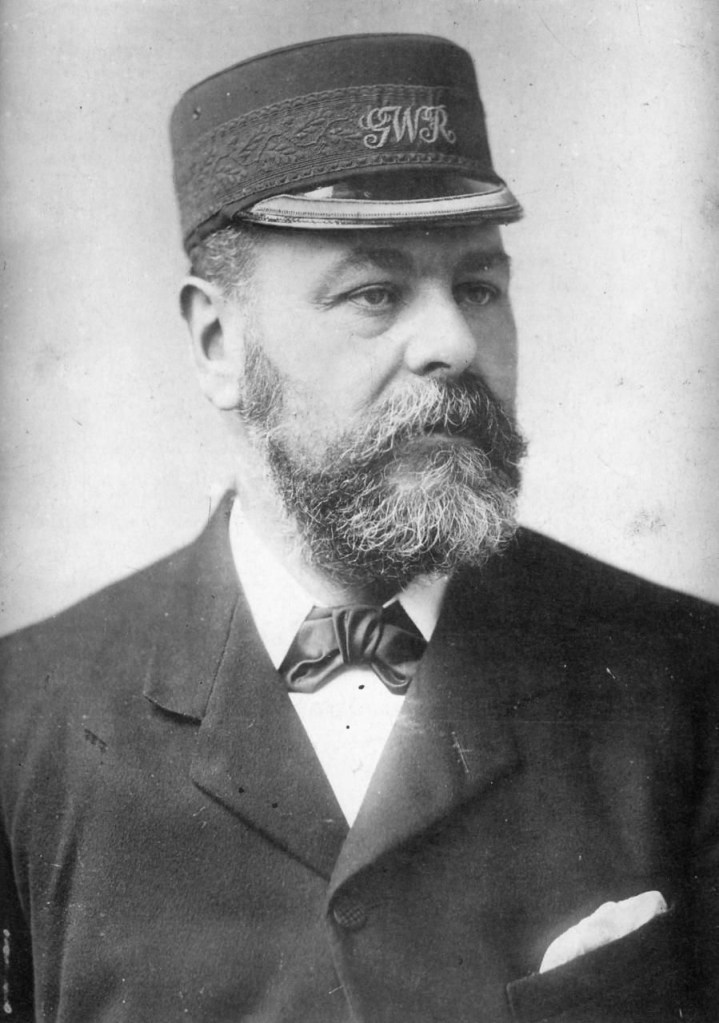
George Lias (1837-1902) started working for the South Devon Railway in the 1850s and transferred to the Cornwall Railway in 1859. He became station master at Par around 1867 and stayed there until his retirement in 1892. His personal life is rather confusing: he married twice, and there is an interesting story there, but before we can fully understand his family history we have to ask the question: what was George Lias’s real name?
Early life
George Lias was baptised as George Hurtchill in 1837 in St Andrew’s Church, Hittisleigh, a village in Devon, which lies between Exeter and Okehampton a little to the north of the modern A30 road that forms the northern boundary of Dartmoor National Park.
George’s father Richard Hutchill (b 1795) married Mary Millman in Hittisleigh in April 1815. In the baptismal records for their ten (possibly eleven) children their surname is variously spelled as Hutchell, Hurchill, Hutchill, Hurtchill, and Huchell; the name Lias is never mentioned. Although the family seem to have moved around in the vicinity of Hittisleigh (Richard’s occupation was recorded variously as a labourer or husbandman) they usually returned to Hittisleigh for their childrens’ baptisms. At George’s baptism their address is recorded as ‘Coles Drewsteignton’: this was Narracott Farm where the tenant at that time was John Cole. The farm is about four miles to the south of Hittisleigh in the parish of Downsteignton. According to the records the family had moved from Narracott to Midlake, Hittisleigh by 1839 when George’s brother Eli was baptised, and George’s parents stayed there for the rest of their lives.
In the 1841 census the family, including George is at Midlake, Hittisleigh and they are recorded as ‘Hutchill’.
After that it seems that the family started to use the name Lias. In the 1851 census the family is at Midlake Cottage, Hittisleigh (by now only their youngest daughter Elizabeth (baptised as Hutchell) is at home, but their name is recorded as Lias. In the previous entry on the census return there is a Samuel Lias at Midlake aged 24. This is almost certainly their son Samuel, baptised in 1826. Two of their other sons Richard and Eli, are also to be found in Hittersleigh as farm servants but using the name Lias.
What about George? There was a George Lias at Bush House, Spreyton about 4 miles to the northwest of Hittisleigh; he has the right age and birthplace. He was a servant in the house of a doctor, John Battishill MRCS. There is no other candidate for George in the 1851 census.
In the 1861 census George’s parents call themselves Lias again. In the 1871 census they are recorded with both names, Hutchill Lias.
There are no clues as to where the name Lias originated or why the Hutchills adopted it in this way.
Career
George Lias transferred to the Cornwall Railway from Plympton station, but other than that nothing is known about his time with the South Devon Railway: he probably joined them in the mid 1850s. When he transferred he was the head guard on the first train to run from Truro to Plymouth in 1859 so we can infer that he must have been acting as a guard in Devon before the transfer.
George’s predecessor at Par was William Ford Maddick who was probably the first incumbent of the post. It’s unclear why Maddick left the railway but over the course of the next three years he was an innkeeper at nearby St Blazey, travelled to America, came back because “the climate did not suit him”, and was declared bankrupt in 1870 with debts of £35. He went on to be a dealer in manure, and then an insurance agent.
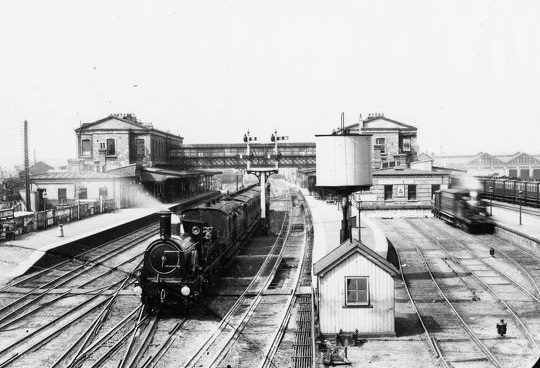
George Lias remained based at Truro until around 1867, when he was promoted to station master at Par, where he remained until he retired in 1892. Par was somewhere in the middle rank of the stations on the Cornwall Railway; its importance was boosted in 1879 when a connection to Newquay was established via the Cornwall Minerals Railway.
While at Par he also acted as postmaster and remained active in that role until he died. By the time he retired a separate house had been built to act as the Post Office and George had moved out of his railway accommodation. The income from this post may have contributed to him being able to retire at the relatively young age of 55. It is also possible that he chose to retire on the 40th anniversary of starting railway work.
Personal life
We know that George was in Truro by 1861 but there is no record of a matching George Lias in the census. There is however a George L Hutchill, 23, a railway guard living in John Street, Truro with his wife Harriet, 24, born in Truro, and their son Earnest J L Hutchill who is 5 months old. And there is a separate household living at the same address: Harriet Rapsey, a widow, and her two unmarried daughters Elizabeth and Lucy, 37 and 34. In fact George Lias Hutchell had married Harriet Rapsey in February 1860, so George is living with his mother-in-law in 1861. The birth of Ernest James Lias (not Hutchill) was registered in 1861: even though George had married with the name Hutchell he was now registering the birth of his children with the name Lias. By the end of 1868 George and Harriet had five children, all registered with the name Lias.
Then Harriet died on April 25th 1870 at Par station (there were two cottages at the station used by the station master and another member of staff). A death notice was published the next day in the West Briton and Cornwall Advertiser which referred to ‘Harriet, wife of Mr. Geo. Lias’.
Consider George’s position here. He has a busy job with a responsibility which presumably requires him to be available at all times. He also has five children aged from 18 months to 9 years–what was to be done?
Less than five months later George Lias married Lucy Rapsey, his dead wife’s sister, who was quite a bit older than George. The marriage was registered at St Austell; unlike the first marriage to Harriet Rapsey there is no parish record of this marriage so they must have had a civil ceremony. This means that George married his deceased wife’s sister, which at that time was specifically prohibited by law.
In 1835 the Marriage Act clarified the legal position of marriage to a deceased wife’s sister: this had previously been prohibited under canon law, and the 1835 Act hardened the law into an absolute prohibition. Opposition to this went on throughout the rest of the 19th century until the passage of the Deceased Wife’s Sister’s Marriage Act (1907) which made such marriages legal. (An analogous Deceased Brother’s Widow’s Marriage Act was not passed until 1921.)
At a time when death in childbirth was not unusual, a marriage to a sister-in-law was an obvious solution to a family crisis: the sister-in-law would be motivated to look after her brother-in-law’s children since she could be confident of a genetic relationship to the children of her deceased sister. It is thought that such arrangements were not uncommon even though they were against the law. A well-known instance of this is the marriage of the Pre-Raphaelite artist William Holman Hunt to his sister-in-law. Holman Hunt’s wife Fannie had died in Florence in 1866 shortly after childbirth. Nine years later he married his wife’s sister Edith in Switzerland in order to circumvent the law. On her journey to Switzerland, Edith Waugh was chaperoned by the writer Mrs Dinah Maria Craik who had made her views on the issue clear in her novel Hannah, published in 1871. Presumably it was this novel that had identified her as a sympathetic candidate for chaperone.
Life after retirement
George Lias appears as a widower in the 1901 census living at the Post Office in Par together with his youngest son Paul and his family. George was sub-postmaster and Paul was a postal clerk. Lucy had died earlier in the same year.
George outlived Lucy by almost two years, dying in 1902 just after Christmas.
A short obituary was published in the West Briton and Cornwall Advertiser shortly after his death.
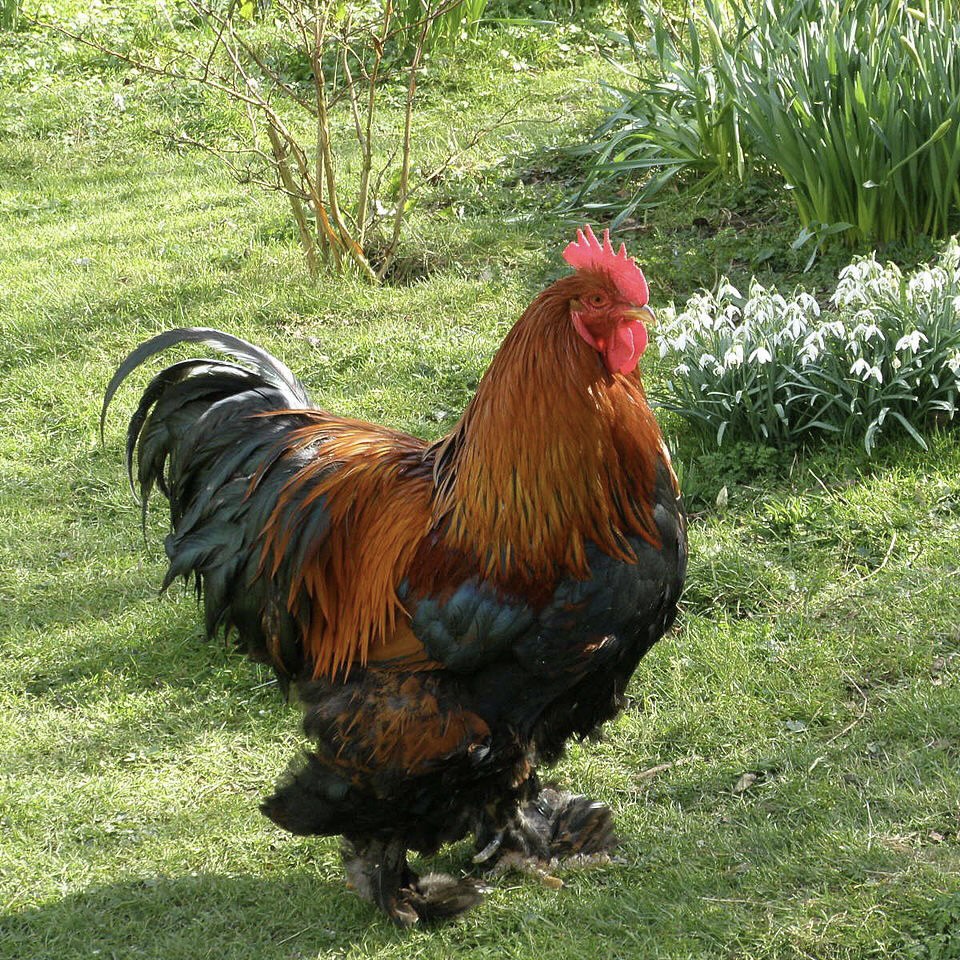
after his retirement from the railway, [he] spent much time with his dog and gun. In former years he also took great interest in poultry, his special fancy being Cochins, and at the big up-country shows he secured many prizes.
Thursday 01 January 1903
West Briton and Cornwall Advertiser
 Obscure Victorians